

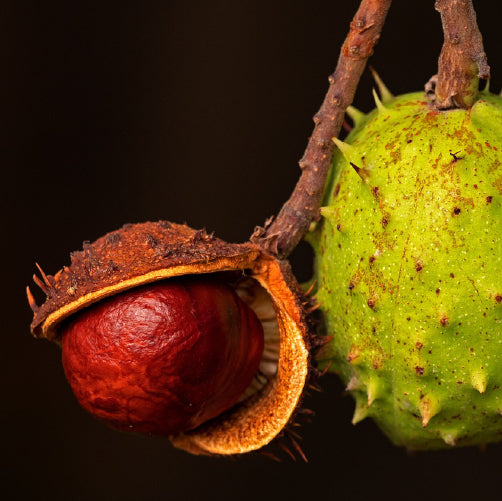
Horse chestnut, known scientifically as Aesculus hippocastanum, is a majestic tree that is also a powerful ally in healthcare.
Its medicinal properties have been valued since ancient times, especially in the field of phytotherapy, but today we are going to explore the benefits of horse chestnut when applied topically, as well as some techniques to make the most of its properties.
Benefits of Horse Chestnut
Relief from heavy legs
One of the most common benefits of horse chestnut is its ability to relieve the sensation of heaviness in the legs. Its extract contains components such as aescin, which improves blood circulation and strengthens vein walls. This makes it a perfect ally for those who spend many hours on their feet or suffer from venous insufficiency.

Anti-inflammatory properties
Horse chestnut has anti-inflammatory properties, which makes it useful in the treatment of bruises, sprains, and other types of injuries. By applying products containing horse chestnut extract, you can promote tissue recovery and reduce associated pain.
Skin Care
Its astringent and toning properties help tighten pores and improve the overall appearance of the skin. Additionally, it can be useful for topically treating varicose veins and hemorrhoids, relieving discomfort and reducing inflammation.
How can you use it?
To make the most of the benefits of horse chestnut, you can use it in the form of a gel or cream, which are easy to apply and absorb easily, stimulating circulation. Here is an idea for a restorative massage:
Find a comfortable spot; you can be sitting or lying down, ideally with your legs slightly elevated.
Put an appropriate amount of gel in the palm of your hands and distribute it evenly over your legs.
Begin your massage from the ankles, applying light pressure as you slide your hands upward, moving along the entire back or side of the leg.
Use upward and circular movements. Start with gentle pressure, and if you prefer, increase the pressure as you feel more relaxed. The massage should be performed from the bottom up, that is, from the ankles toward the thighs, to help stimulate venous return and circulation.
Once you reach the calf area, you can use your thumbs to perform deeper movements, always moving upward. If you notice tense or painful spots, apply more focused pressure to release the tension.
When you reach the thigh area, you can use your hands in long strokes, but you can also perform circular movements on the muscles of the inner and outer thigh.
The feet can also benefit from this massage. After working on your legs, apply a small amount of gel to your feet and perform circular movements with your thumbs on the soles and toes. This will help relieve any accumulated tension and improve circulation.

Finally, for extra relief, you can elevate your legs for a few minutes after the massage. This facilitates blood flow back to the heart and can further reduce the feeling of heaviness or swelling in the legs.
Horse chestnut is a very valuable gift from nature that can provide multiple benefits to our health and well-being. Its ability to improve circulation, reduce inflammation, and care for the skin makes it an exceptional ingredient in topical treatments, so incorporating horse chestnut into your personal care routine can be an excellent way to take advantage of its properties.
By: Sara Rojas González