

Highly processed foods—those we find on the market in packages or in formats that are practically ready to eat, such as packaged snacks, bakery products, commercial beverages, sweets, cereals, etc.—are an alternative that meets the need to acquire products that help us optimize time or are easy to transport and consume.
However, we often do not stop to look at their ingredients and nutritional contribution, and we consume them without considering that the prolonged and deliberate consumption of some of them could lead to the development of chronic diseases in the long term.
The key nutrients we should always check whenever we purchase any of these products are: amount of sugar, sodium, saturated fat, cholesterol, and trans fats, since their consumption should be as low as possible. To do this, it is necessary to keep in mind that on the nutritional label, the quantity of these and other nutrients is expressed per serving, and that often a package may contain more than one serving. As additional information, we should check the calories provided by each serving of that food to avoid consuming excess calories.
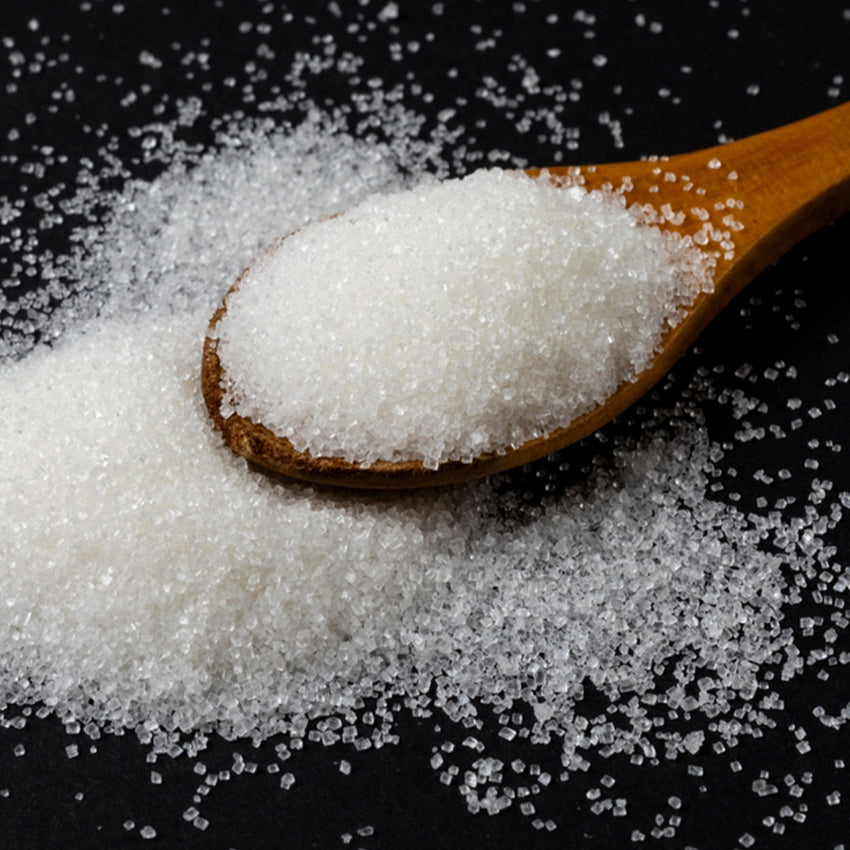
Now, we will focus on talking about free sugar content. This includes monosaccharides and disaccharides (sugars of one or two molecules, respectively) added to food or beverages, and sugars naturally present in foods such as honey, syrups, fruit juices, and fruit juice concentrates. Regarding added sugar, it is widely used in the industry to provide flavor, palatability, texture, consistency, among other characteristics to products, as well as to increase their shelf life.
The World Health Organization (WHO) recommends for both children and adults that free sugar consumption does not exceed 10% of total daily caloric intake; that is, of all the calories we consume in a day, less than 10% should come from free sugars. This recommendation is based primarily on a review of numerous scientific studies that associate high sugar consumption with unhealthy weight gain and an increased risk of developing chronic diseases.
If we base this on a diet that provides an average of 2000 calories, the recommended consumption of free sugar would be less than 50 grams per day. Since these 50 grams must include added sugar plus the sugar naturally found in food, the ideal is not to consume those 50 grams as added sugar, but approximately half of that, i.e., 25 grams.
Here we present the AVERAGE sugar content contained in some products that you have possibly consumed at some point, or that you habitually include in your diet:
- Powdered chocolate drink: serving: 25 grams: sugar 13 grams: 6 cubes
- Creamy ice cream: serving ½ small cup: sugar 20 grams: 9 cubes
- Prepared gelatin: serving: 1 small chocolate cup: sugar 22 grams: 10 cubes
- Chocolate chip cookies: 4-unit package: sugar 11 grams: 5 cubes
- Cream sandwich cookies: 4-unit package: sugar 14 grams: 6 cubes
- Regular soda 600 mL: Large plastic bottle: sugar: 63 grams: 27 cubes
- Regular soda 350 mL: serving: 1 medium glass bottle: sugar: 37 grams: 16 cubes
- Regular soda 200 mL: serving: 1 mini bottle or 1 7-ounce glass: sugar 21 grams: 9 cubes
- Sugared breakfast flakes: ½ cup or 30 grams: sugar: 2.4 grams: 1 cube
- Sugared chocolate-flavored breakfast cereal: ½ cup or 30 grams: sugar: 9 grams: 4 cubes
- Chocolate-covered cake: serving 1 medium unit: sugar 27 grams: 12 cubes
- Flavored whole yogurt 200 mL: 16 grams: 7 cubes
- Commercial orange juice 200 mL: sugar: 23 grams: 10 cubes
Now that you know how much sugar these foods provide, you will have the information to decide how often to include them in your diet. Remember that food, in addition to nourishing us, should give us pleasure, and that the pillar of a healthy diet is the balance between what we require, consume, and expend.
Camila Henao
Nutritionist Dietitian
University of Antioquia