

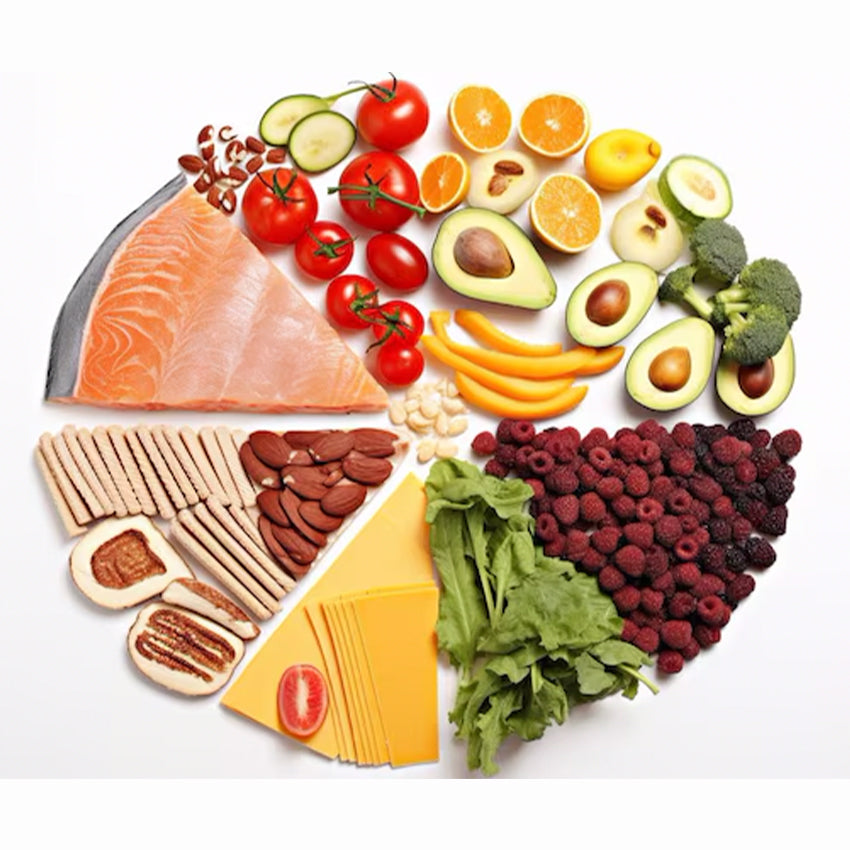
Whether speaking about food, reading on the subject, attending a consultation with a nutritionist, or checking food nutrition labels, you may have noticed the word serving appearing, but do you really know what this term refers to?
A serving can be explained as the recommended amount of food or drink that can be consumed to receive an average amount of calories, which is specifically defined for each food group.
The main food groups that are part of the Colombian dietary pattern are: Meats, dairy, substitutes, legumes, cereals, roots, plantains and tubers, fruits, vegetables and greens, fats, nuts and seeds, and sweets. Ideally, all these food groups should have a place within a varied and balanced diet, avoiding excesses in both serving sizes and the number of servings.
Defining serving sizes for a population is no easy task; this is usually handled by food consumption experts, who are highly knowledgeable about nutrition, dietetics, and above all, the food culture of the region. In our country, recognized professionals have dedicated themselves to this, and it is precisely from their recommendations that we bring this article to you.
Below, we tell you the suggested serving sizes for healthy adults, taking into account the most consumed foods among the Colombian population; clarifying that this is a generalized indication and that under no circumstances does it replace other recommendations given by a nutritionist, nor does it equate to a nutritional consultation.
Meat group: *
- Beef or pork (lean): 100 grams (raw)
- Canned tuna in water: 1 can of 120 grams
- Chicken (thigh or leg quarter): 1 medium piece, preferably skinless
- Chicken (Breast): ¼ of a large piece, equivalent to 80 grams (raw)
- Salmon: 1 small/medium piece
Dairy group: *
- Liquid cow's milk: 1 small 200 mL glass
- Powdered cow's milk: 3 heaping tablespoons
- Kumis, oatmeal drink, or yogurt: 1 small 200 mL glass or pouch
- Yox: 1 commercial unit
- Greek or spoonable yogurt: 1 small glass
*Average calorie intake varies in whole, semi-skimmed, or skimmed dairy products.
Substitutes group: *
- Fresh cheese, quesito, curd: 1 semi-thick slice
- Mozzarella cheese: 2 thin slices
- Chicken egg: 1 unit
- Quail eggs: 5 units
- Mortadella or ham: 2 slices
- Traditional sausage: 1 unit
Cereal group: *
- "Tela" arepa: 1 medium thin unit
- Almojábana or pandequeso: 1 small unit
- Rolled oats: 4 heaping tablespoons
- Cooked rice: 6 tablespoons (white, brown, or parboiled)
- Sweetened breakfast cereal: 2/3 of a chocolate cup
- Cooked pasta: 2/3 of a chocolate cup
- Saltine crackers: 3 units
- Wheat flour or cornstarch: 4 level tablespoons
- Bread, toast, or tortilla: 1 slice or small unit
Roots, plantains, and tubers group: *
- Green plantain: ½ medium unit
- Ripe plantain: 1/3 medium unit
- Common or white potato: 1 medium unit
- "Criolla" (yellow) potato: 3 medium units
- Arracacha or yam: 1 small piece
- Cassava (yuca): 1 medium piece
Legumes group: *
- Beans (all varieties), lentils, chickpeas, dry peas, and soybeans: 1 medium heaping ladle
*The calorie content of 1 serving of legumes is approximately equivalent to 2 servings of cereals, or roots, plantains, and tubers.
Vegetables and greens group: *
- Broccoli or mushrooms: 1 chocolate cup
- Red tomato, carrot, or green beans: ½ chocolate cup
- White or red onion, bell pepper, or chonto tomato: 1 small unit
- Lettuce, cucumber, spinach, celery, eggplant, zucchini: free consumption due to low calorie content
Fruit group: *
- Banana, chontaduro, mango, apple, orange: 1 small unit
- Guava, kiwi, passion fruit, murrapo (baby banana), papayuela, pitahaya: 1 medium unit
- Melon, pineapple, papaya, watermelon: 1 medium slice
- Claudia plum, tree tomato, lulo, fig, sapote: 2 units
- Strawberries: 9 units
Fats group: *
- Sunflower, corn, soy, avocado, canola, olive, or palm oils: 1 tablespoon
- Vegetable margarine (any source): 2 level teaspoons
- Ranch dressing, vinaigrette with fat, pesto, or tartar sauce: 1 tablespoon
- Hass avocado: ¼ unit
- Common avocado: 1/8 of a medium unit
Nuts and seeds group: *
- Almonds (no salt or sweet coating): 3 units
- Whole walnuts: 2 units
- Unsalted peanuts, cashews, or pistachios: 1 tablespoon
- Shredded dried coconut: 2 tablespoons
- Sesame, poppy, pumpkin, sunflower, or soy seeds: 1 tablespoon
- Flaxseed powder: 2 tablespoons
- Whole flaxseeds: 3 tablespoons
Sweets group: *
- White sugar or powdered panela: 2 tablespoons
- Guava paste bar, chocolate bar, panelita: 1 small unit
- Creamy ice cream: 1 small scoop
- Prepared gelatin: 1 chocolate cup
- Arequipe (dulce de leche) or honey: 1 tablespoon
That said, the number of servings a person should consume from each food group throughout the day will be defined by the nutrition professional during their consultation, taking into account aspects specific to the patient's individual context, such as: their nutritional and health status, the physical activity they perform, their ability to access food, their food culture, among other factors.
*Serving sizes taken from the third edition of the exchange list, prepared by the food consumption group of the School of Nutrition and Dietetics of the University of Antioquia.
Camila Henao Uribe
Nutritionist Dietitian
University of Antioquia