

Tea is a beverage that began to be consumed in the East in ancient times, and since then its use has spread to the rest of the world; today, it is considered the third most consumed beverage in the world, after water and coffee.
What is tea?
It is an infusion prepared from the leaves of the Camellia sinensis plant, which can vary depending on its processing and the time at which it is harvested. Tea harvesting is done manually, after which a large part of the moisture is removed to prevent the leaves from being contaminated by microorganisms, and subsequently, oxidation occurs. In this last step, the enzymes and other substances inherent to the plant react upon contact with oxygen, causing important reactions so that the tea plant can provide the benefits attributed to it.
On this occasion, we will talk about MATCHA TEA, which is the same green tea but with a different post-harvest processing that enhances its benefits, which consists of placing its leaves in the shade after they have been harvested manually, and after some time, they are finely ground. This process helps chlorophyll, nutrients, and antioxidant compounds to concentrate, elevating the tea's properties; in other words, matcha tea is green tea raised to its maximum power.
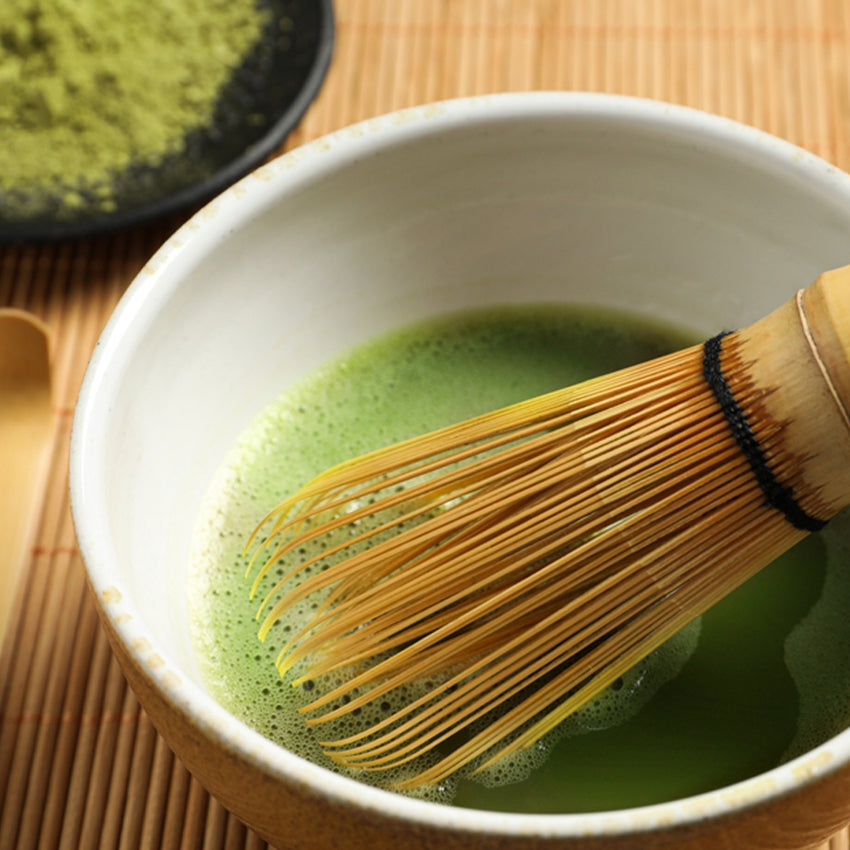
This tea does not come in the form of tea bags, but rather in a powdered form; its sensory profile tends to be much more exquisite, strong, and herbal compared to traditional green tea presented in tea bags.
Discover here the Funa matcha tea
There is Japanese-origin matcha tea, in which the techniques are much more precise to obtain a higher-quality product. For a time, the plant is placed in the shade to increase chlorophyll levels. Then, the youngest leaves, which contain the most properties, are selected by hand, steamed, and ground with granite stones. As a result, Japanese Matcha is a powder with a more intense, fine color and a sweet nuance.
There is also Chinese-origin matcha tea; it is generally more economical, made with leaves that are not the youngest, and it may also contain stem residues. In this case, it is dried over fire, which means it does not retain as many of its properties. The result is a pale green powder with a more earthy texture and a more bitter taste.
Varieties made from first-harvest leaves and buds are considered higher quality and are intended for the Japanese tea ceremony or 'cha no yu'; 3rd and 4th harvest matchas, which are pale and more bitter, are usually used for culinary purposes.
How to choose matcha tea correctly?
- Check that the color of the powder is an intense green; it should never be pale
- Its aroma should reveal a vegetal character, with slight marine nuances
- When whisked with hot water (between 70 and 75ºC), it should show a balanced flavor between sweet and bitter, and it should leave a certain residual taste after consumption.
By: Camila Henao Uribe – Dietitian Nutritionist, University of Antioquia