

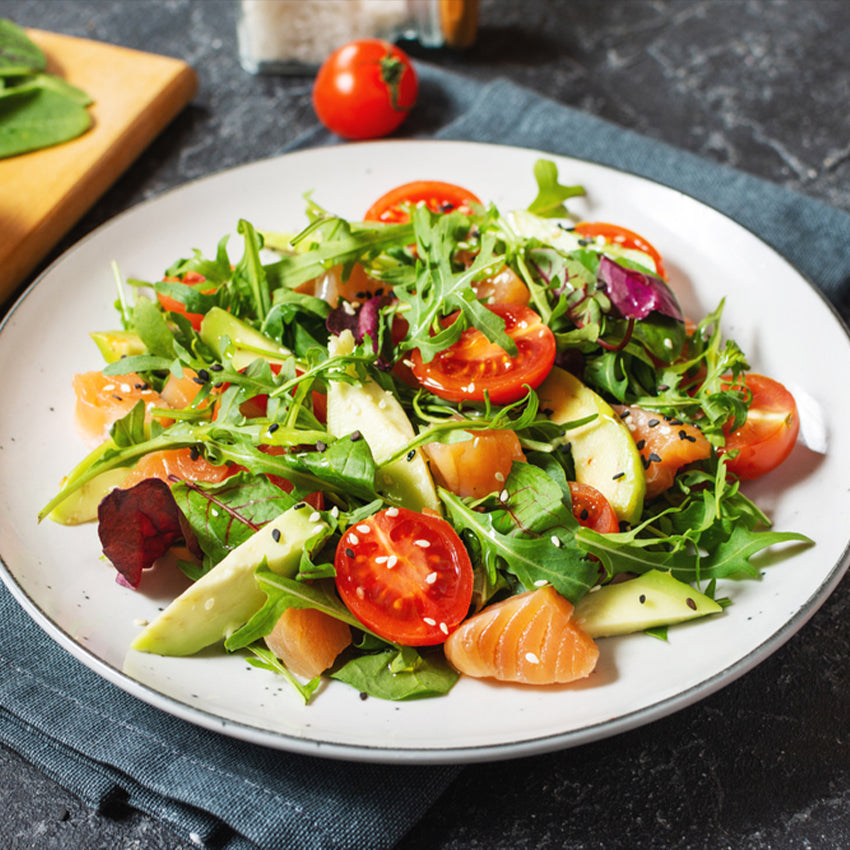
Vegetarianism encompasses all those diets in which some or all animal products are partially or totally limited, restricted, or eliminated; and in which the consumption of plant-based foods takes precedence, such as: cereals, legumes, oilseeds, fruits, vegetables, roots, plantains, tubers, seeds, sprouts, nuts, and germinated foods.
People who adopt this type of diet generally associate it with social, cultural, economic, religious, environmental, or health factors. This trend has been clearly increasing in recent years worldwide, and Colombia has been no exception.
There are diverse subtypes of vegetarianism, among which some are more strict or restrictive and others are a bit more flexible or permissive; below, we will explain which are the most common and their permitted foods:
| Subtype of vegetarianism | Permitted foods and most common nutritional deficiencies: |
| Semi-vegetarians | Generally, these are people who eliminate red meat from their diet. They can consume dairy, chicken, eggs, and fish. With this type of diet, no high risks of nutritional deficiencies are produced or exist. |
| Pescatarians | Includes dairy, fish, and eggs; they eliminate other types of meat. |
| Lacto-ovo vegetarians | They consume eggs, milk, and dairy products; they eliminate all types of meat. |
| Lacto-vegetarians | They consume milk and dairy derivatives; they eliminate eggs and all types of meat. |
| Ovo-vegetarians | They ingest eggs, but do not allow the consumption of milk or dairy derivatives, nor meats. |
| Vegans | They exclude every type of animal food and all their byproducts and derivatives (honey, royal jelly, dairy, eggs, all types of meat, and any derivative thereof). |
| Raw foodism | In this case, the diet is based on fruits, vegetables, nuts, seeds, cereals, legumes, and sprouts. There may be cases where non-pasteurized dairy, as well as raw meat and fish, are included. |
| Raw veganism | Excludes the exact same foods as the vegan diet, and additionally all those that, even being of plant origin, have undergone cooking processes. It is perhaps the strictest type of vegetarianism and the one in which the most nutritional deficiencies can possibly occur. |
The ideal is for any vegetarian diet to be carefully planned and accompanied by a nutrition professional, as depending on the type of vegetarianism, it will be necessary to resort to strategies such as: specific food combinations, consumption of fortified and/or enriched foods, consumption of nutritional supplements, specific nutrient supplementation, need for multivitamins, among others; all of these seeking to ensure that nutrient needs are covered in the best possible way.
Camila Henao
Nutritionist Dietitian
University of Antioquia